Strategic Planning Without the Eye Roll: A Framework That Actually Works
By Valerie Puchades, FSMPS, CPSM
Let’s be honest, most leaders of architecture and landscape architecture firms have a love–hate relationship with strategic planning. You know you need one. You might even want one. But the minute someone suggests, “Let’s do a strategic plan,” your eyes glaze over. And often for good reason.
When your firm is dealing with compressed schedules, overloaded principals, shifting markets, and generational shifts, traditional planning processes simply can’t keep up. Somewhere along the line, “strategic planning” became synonymous with long, expensive, drawn-out exercises that result in a 60-page document… that no one reads.
Rather than producing a document that tries to map the next five years in detail, I suggest a different approach, one that is far more effective: a strategic framework. What’s a framework, you ask? It’s a concise, prioritized structure that sets a five-year vision and direction, identifies what matters most today, and outlines the first steps needed for actionable progress. It’s faster to develop, more practical to implement, and flexible enough to evolve with your firm.
Traditional Plans vs. Strategic Frameworks
During a traditional planning process, there are lots of ideas. Lots of discussion. Very little action. It takes the basic steps of discovery (researching where your firm has been), visioning (deciding where your firm should go next), and putting pen to paper, and extends each step. You have lots of meetings over a long period of time, you spend lots of time revisiting ideas, and you spend very little time bringing the team to a consensus. Meaning you're just talking, kicking each strategic priority to next month, and going back to your day-to-day while waiting for the plan to get a green light.
A strategic framework does this instead:
You put together your discovery based on readily available information.
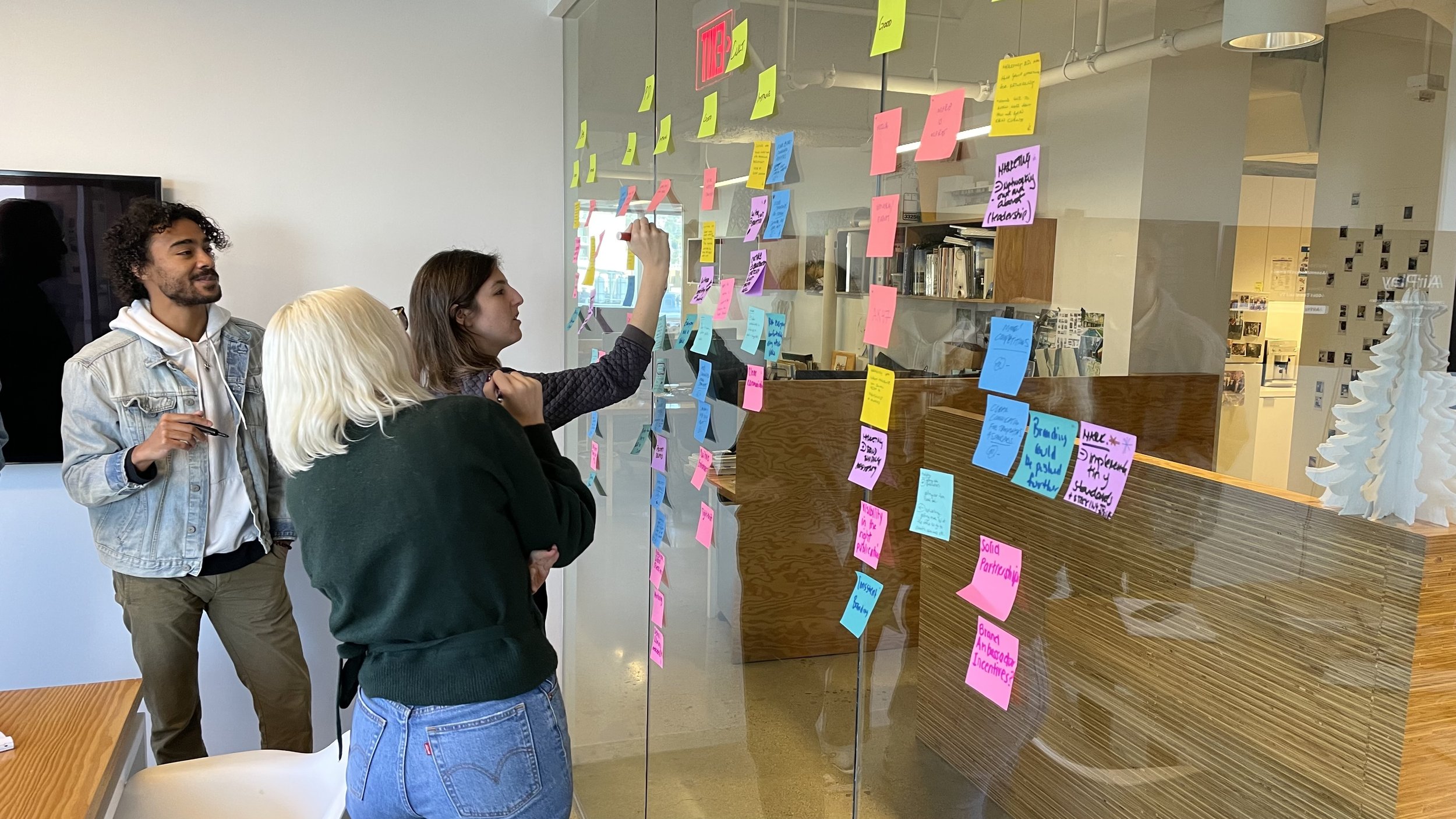
You clear your calendars and hold a planning retreat.
The leadership team aligns on the priorities by the end of the retreat, and everyone knows who has the authority to move them forward.
The framework defines the first year of action items.
Roles and responsibilities become immediately clear.
Implementation begins right away.
Valuable meeting time is spent reviewing progress and discussing next steps.
By the time a traditional plan is still being polished, a firm using a framework is already moving: gathering intel, making decisions, setting relationships in motion, and learning quickly what works.
This approach isn’t theoretical. For the small and mid-sized firms AVEC works with, frameworks consistently move teams from alignment to execution in weeks, not months.
Why Frameworks Work Better (Especially for Small Firms)
1. They’re faster to develop.
No year-long commitment, no endless retreat cycles. You get clarity quickly.
2. They’re easier to implement.
Small teams don’t need 40 initiatives. They need the right four to six, with owners and timelines.
3. They adapt as your firm changes.
Because the framework isn’t locked in a binder, it evolves as the market shifts or your goals grow.
4. They reduce planning fatigue.
Fewer meetings, fewer drafts, fewer “we should revisit this,” and more forward momentum.
5. They build buy-in through action, not aspiration.
Progress becomes visible early, which strengthens confidence and accountability.
Planning Isn’t the Problem. Overplanning Is
I’m not suggesting that strategy isn’t important. Quite the opposite. But strategy only matters if it can be implemented, and implementation requires right-sizing the process to your team.
Small and mid-sized firms don’t need a 60-page plan.
They need clarity, alignment, and practical next steps.
A strategic framework provides all three.
A Final Thought
If your firm is ready to refocus or recalibrate what’s next, consider starting with a structure that gets you out of planning mode faster and into forward motion. A framework doesn’t just help you decide where you’re going, it helps you actually get there.