
Strategic Planning for Architecture Firms
A Practical Approach for Principals
For many principals of small and mid-sized architecture firms, strategic planning tends to follow a familiar arc. It’s either something you’ve done before, but it didn’t translate into meaningful change. Or it’s something you know would be valuable, but goals you set never quite rise above the day-to-day demands of running the business.
That tension is understandable. Most firms are already operating at capacity. Between project delivery, staffing, client relationships, and business development, there’s very little room for anything that doesn’t clearly improve how the firm operates.
And too often, strategic planning just doesn’t.
Not because it isn’t important, but because the way it’s approached doesn’t create enough clarity to compete with everything else.
In the absence of clarity, something else steps in to define direction. Work that comes through the door starts to shape priorities. Opportunities that feel hard to turn down begin to accumulate. Over time, firms find themselves growing—but not always in ways they intend.
That’s usually the inflection point. Not a lack of ambition, but a realization that being busy isn’t the same as moving forward.
The firms that navigate this well don’t necessarily spend more time planning. What they do differently is make clearer decisions—and use those decisions to guide what they take on, and what they don’t.
Strategy as a Set of Choices
One of the more persistent misconceptions around strategic planning is that it needs to be comprehensive to be useful. In practice, the opposite is often true.
The most effective plans are built on a small number of decisions that are clear enough to guide trade-offs over time. They don’t try to capture every possibility or anticipate every outcome. Instead, they establish a direction that leadership can consistently act on—even as conditions change.
That shift—from trying to cover everything to choosing a few things deliberately—is where many firms struggle.
It’s rarely because there aren’t enough ideas. If anything, most firms have more viable opportunities than they can reasonably pursue. The difficulty is deciding which of those opportunities actually matter right now, and being willing to set the others aside.
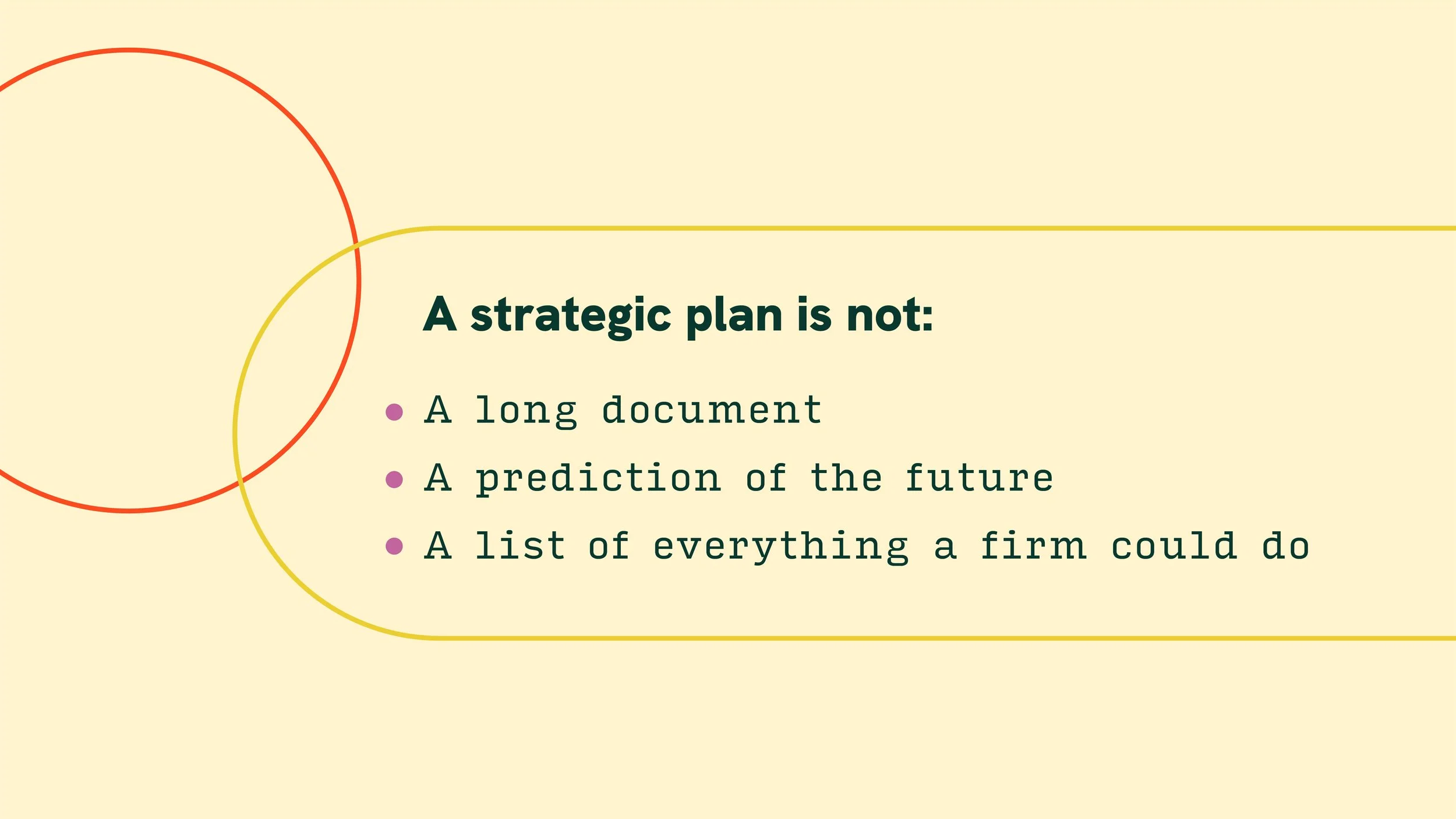
That’s not just a strategic exercise; it’s a leadership one. Every priority carries a cost in time, attention, and energy. Without clear choices, those resources tend to get diluted across too many efforts, and progress becomes harder to sustain.
A useful way to ground this is by thinking in terms of three horizons: strengthening what the firm already does well, expanding into adjacent opportunities, and pursuing more transformative shifts. While all three have a role, the greatest impact for most firms tends to come from being more deliberate about the first two—where focus and execution matter most.
From Insight to Action
A strong strategic plan doesn’t need to be complex, but it does need to connect insight to action in a way that holds up over time.
That usually starts with developing a clear, shared understanding of the firm’s current position. Not just at a high level, but in terms of where profitability is actually coming from, which pursuits are converting into work, and how both staff and clients experience the firm. Most principals already have an intuitive sense of this. The value is in making that understanding explicit—and aligned across the leadership team.
From there, the work shifts to direction. This is often where things become more challenging, not because of a lack of ideas, but because different leaders bring different assumptions about growth, risk, and investment. The goal isn’t perfect agreement. It’s arriving at a direction that is clear enough—and supported enough—that it can guide real decisions.
The final step is where many plans lose traction: translating that direction into a focused set of priorities and following through on them. In practice, this tends to mean fewer initiatives than expected, with clearer ownership and a more disciplined approach to measuring progress. Without that level of specificity, even well-considered strategies tend to fade as day-to-day demands take over.
Where Plans Break Down
Even with a sound approach, there are a few patterns that consistently undermine progress. Plans become overloaded with too many priorities, making it difficult to maintain momentum on any one of them. Responsibility is shared too broadly, which can blur accountability and slow decision-making. And early alignment gives way to inconsistent follow-through once attention shifts back to project work.
These aren’t structural issues as much as they are practical ones. Strategy doesn’t fail because the ideas are wrong. It fails when there isn’t enough clarity to support consistent action over time.
Why It Matters
Every firm is already operating with a strategy, whether it’s been formally defined or not. The question is whether that strategy is being shaped intentionally or simply emerging from a series of near-term decisions.
Over time, that distinction becomes more pronounced. It influences the kind of work a firm becomes known for, the clients it attracts, and the experience of the people doing the work. It also determines whether growth feels aligned—or just reactive.
At its best, strategic planning doesn’t add another layer of effort. It reduces complexity. It gives leadership a clearer basis for making decisions and helps ensure that the firm’s trajectory reflects its priorities, not just its workload.
For firms that are considering revisiting their direction, the challenge isn’t starting from scratch. It’s approaching the process in a way that leads to clearer choices—and a plan that’s actually used.
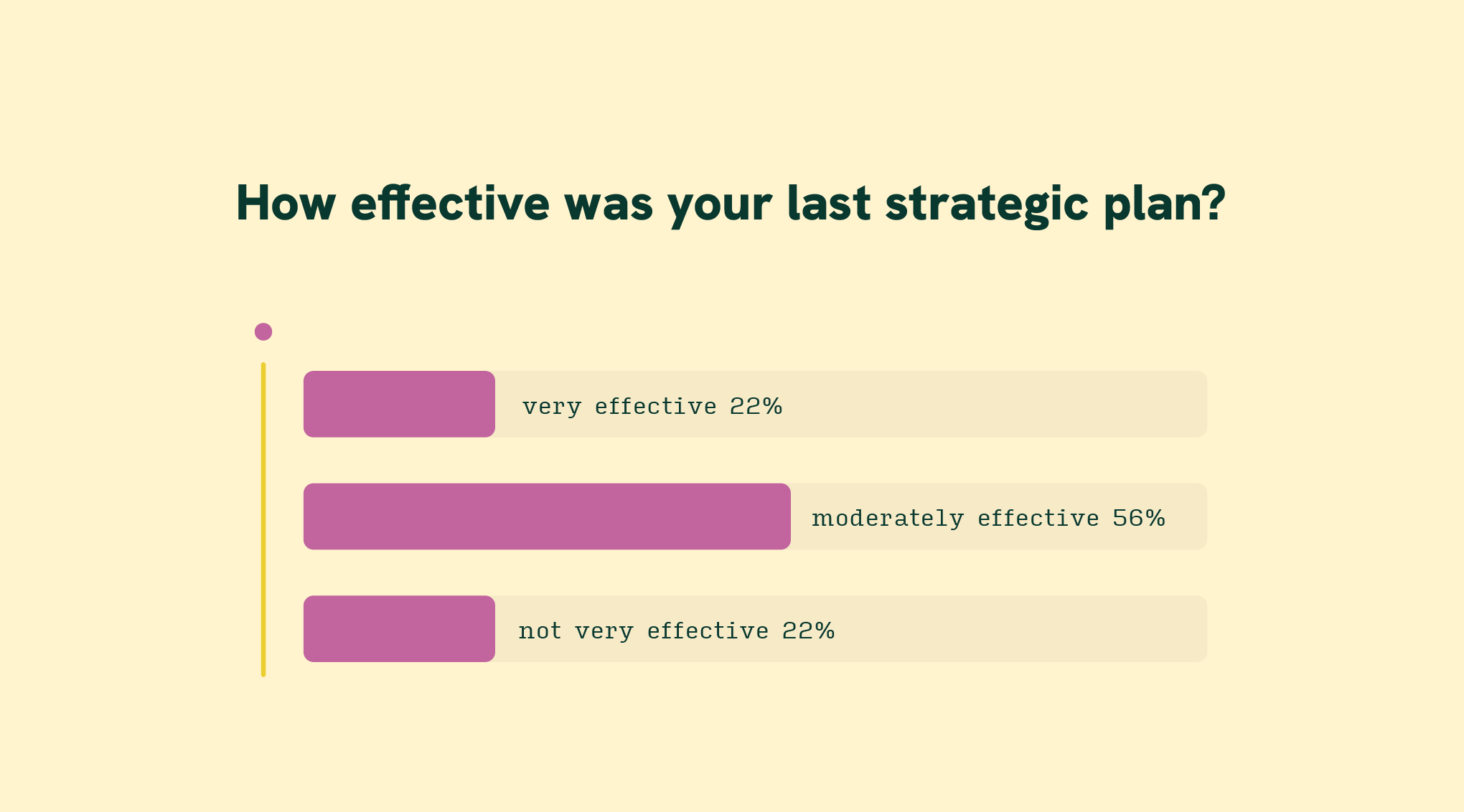
The data above came from firm leaders who attended our recent webinar. Watch the recording.